t e m p o r a l
d o o r w a y


|
t e m p o r a l
|
d o o r w a y
|
|
| |
|
An Analysis Of A Behavioral Classification System |
The problem of intent is a frequent issue among UFO researchers and analysts. Many authors - including Lorenzen, Keel, and Hopkins - have attempted to deduce a grand design behind the phenomenon. Unfortunately, none of these workers advanced a classification system which aids in a discussion pro or con of their suggestion.
I recently developed two behavioral classification systems for UFO reports. These systems cover the behavior of the objects and their occupants and the behavior of the occupants in situations interpreted as "contact" (there is some overlap between the systems). This document describes a higher level classification of the resulting categories, providing some insight into the distribution of "intent" among the variety of reported UFO events. Note, however, that this is an analysis of the prevalence of certain interpretations in the classification system, not in a classified database of cases. Therefore, one must be cautious in interpreting the presence or composition of certain higher level categories in the result of this analysis, especially if attempting to use them to suggest intent. Such an interpretation is, in my analysis, premature until a classified database has been created and verified by peer review.
The following table illustrates the classification of categories in the object / occupant behavior classification system with regard to apparent tactical (short range) intent. Note that some categories (Busy and Breakdown, for instance) can apply to occupants engaged in activity near the object.
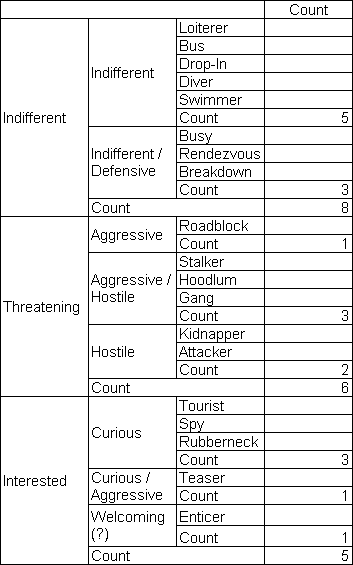
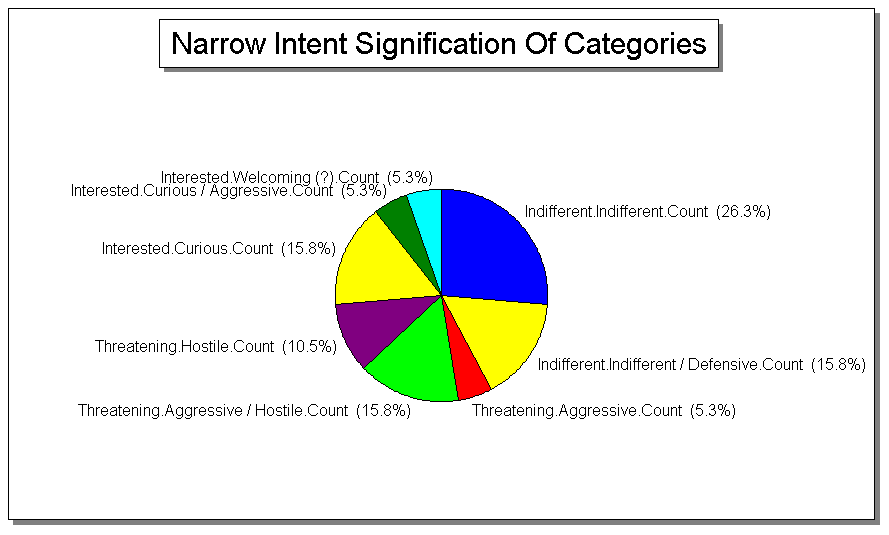
The result of graphing this distribution is:
More useful, perhaps is a broader classification of tactical intent:
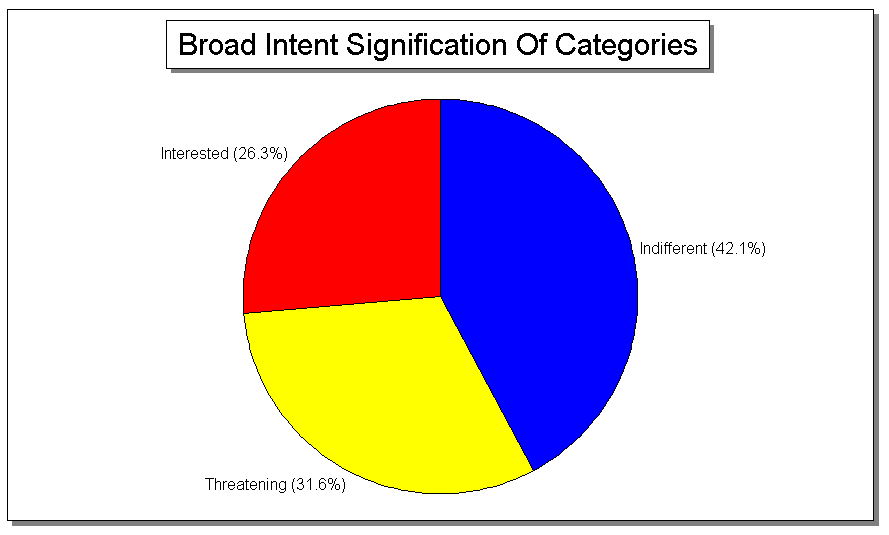
In short, the classes of exhibited behavior (not the frequency of occurrence of the behaviors themselves) are roughly evenly split between curiosity, indifference and threat (which includes overt hostility or apparently intentional lasting damage to people, living things, or property).
When occupants are in contact with the human witness, a different set of behaviors is reported. Obviously, the "Indifferent" type of behavior disappears, since, by defintion, contact is an intentional interaction.
The following table summarizes the classifications:
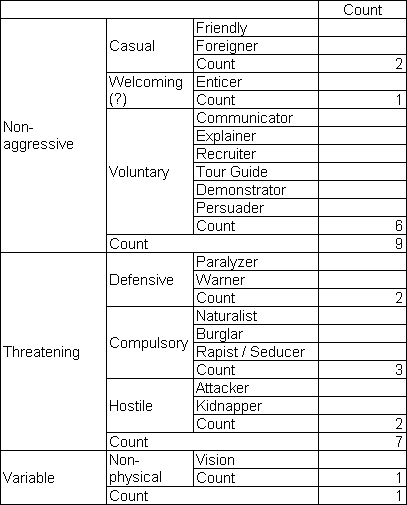
Graphically, the detailed categories break down as follows:
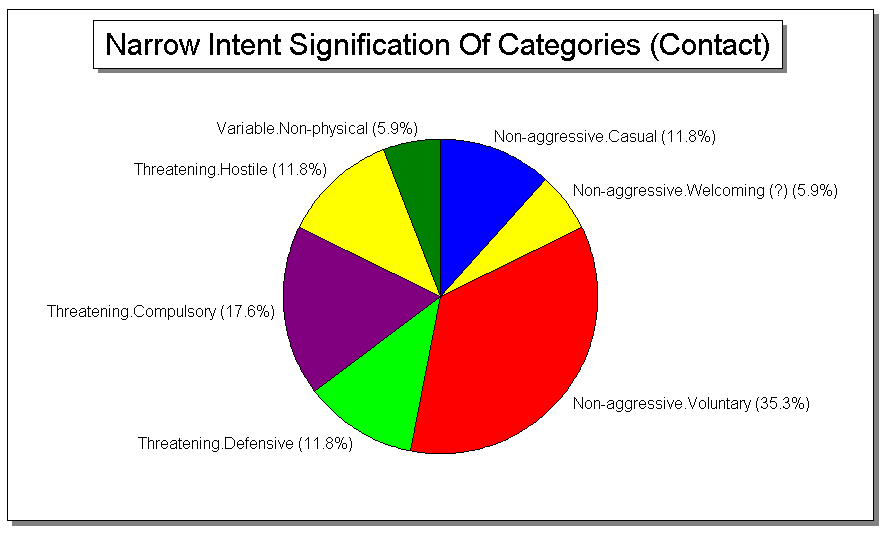
Once again, a wider classification may be of interest:
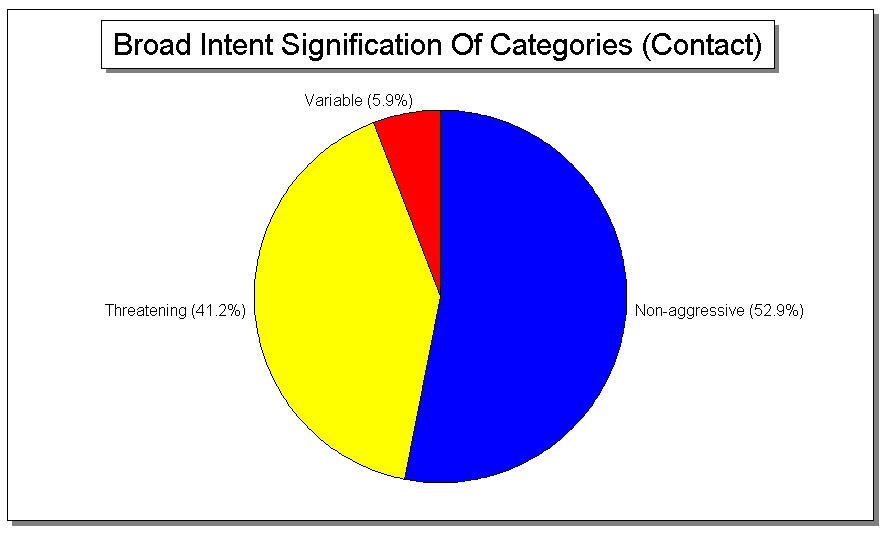
A general examination of these results suggests that UFO and occupant contact behavior spans a wide range of behavior from the viewpoint of one interpreting the objective actions reported. Some types of behavior are notable by their absence (benevolence, creativity, etc.). Some of these can be ascribed, however, to individual events within the encounter, with the encounter retaining its nature as classified here (suggesting more work on event level classifications may be needed). It is also, of course, possible that the classification system is incomplete, since it remains a developing construct. Of particular note in this regard is the "Variable" classification within the contact behaviors. This relates to the "visionary" experiences, and strongly suggests a need for a more detailed subclassification within that category.
In addition, a certain overlap between the systems is of uncertain effect. For instance, kidnappers exist in both systems and do not represent a different class of events in those systems. A careful consolidation of the two systems seems necessary. At least, some thought needs to be given as to where to draw the line between object / occupant and contact behaviors, and as to whether the presence of occupants automatically signals a split.
Another point of interest is a certain difference between the classification of interpretations of the object behavior and of contact behavior. A speculative accounting for part of this difference (for instance the absence of threatening and the presence of compulsory in contact, or the presence of voluntary in contact and its apparent absence in object behaviors) might suggest that threatening actions by objects in the object / occupant system may simply be a more "overpowering" curiousity than we are able to accept with comfort. A terrestrial analogy might be in the inspection of a freshly caught or trapped animal by a human interested in a casual but close view. The overwhelming sense of power from the examiner and fear experienced by the animal in such a case may be similar to what the UFO witness experiences in categories like "Stalker". One may also infer a general indifference by the phenomenon to the emotions of the witness, one which is not so different from the indifference or mild concern felt by a human observing fear in a trapped or captured animal.
Here we have come perhaps somewhat past the edge of a reasonable interpretation of the results of this more abstract classification. More work needs to be done with regard to classifying sightings into these categories and determining the relative proportions of these events in the case lore. Folklorists might apply this or a similar classification system to stories of ghosts, elves / fairies, and other claimed "intelligences" to see if the prevalence of behaviors found among UFO reports is distinct. As I have often stated, even if UFO events do not have an objective reality, the patterns described by these categories are part of the phenomenon, and require discussion and investigation.
In addition, more work needs to be done extending the classification system downward, looking for stereotypical "scripts" of events which can then be grist for the mill of the technological interpreter, the paranormalist, and the folklorist.
|
art
|
 |
||
|
writing |
products
|
||
|
music
|
find anything
|
||
| climbing |
sign-in
|
||
|
programming
|
|||
| main page |
|
Copyright © 2001 by Mark
Cashman (unless otherwise indicated), All Rights Reserved
|