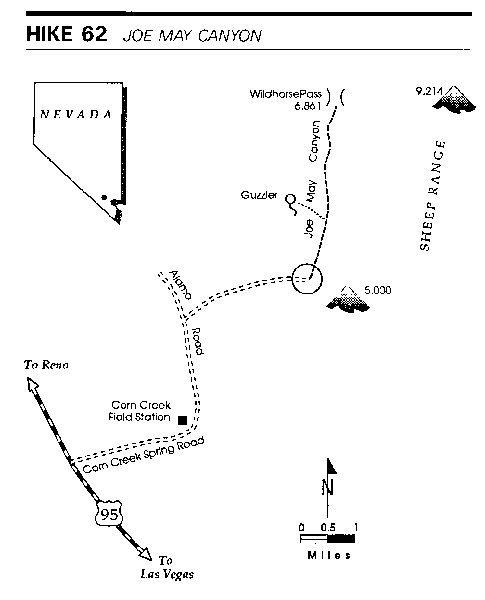
Finding the trailhead: See Map. From Las Vegas drive northwest twenty miles on U.S. Highway 95 then turn right (east) on the Corn Creek Springs Road (this road is signed "Desert National Range"). After four miles turn left (north) onto Alamo Road at the Corn Creek Field Station. Drive north three miles then turn right (east) onto the Joe May Canyon Road and continue 3.7 miles to the proposed wilderness boundary, identified by a "No Vehicles" sign. The Joe May Canyon Road is unimproved and a high-clearance vehicle is recommended. Four wheel drive is not needed.
The Corn Creek Field Station, passed on the way to the trailhead, has an interesting history. It has seen use as a campsite, stagecoach stop, and ranch. Corn Creek Springs and part of the surrounding land was purchased in 1939 for use as a field station for the wildlife refuge. The station, with its trees, pasture, and spring-fed ponds, attracts a wide variety of migrating birds not commonly observed in such an arid environment. The ponds also provide habitat for the endangered Pahrump poolfish. Evidence of man's earlier occupation of this site is provided by Native American arrowhead and tool flakes that litter the surrounding grounds. Also of interest are the historical buildings located at the northern side of the field station.
The hike: Walk north up Joe May Canyon to Wildhorse Pass, which provides an excellent panoramic view into scenic Picture Canyon. About 1.5 miles from the "No Vehicles" sign is the Joe May Guzzler in a small side canyon. This is an example of one method used to develop water for bighorn sheep and other wildlife.
Desert bighorn sheep prefer rugged mountains and negotiate steep terrain with impressive agility for their somewhat bulky appearance. The size of a small deer, their gray brown color blends nicely with the desert tones, making them difficult to spot. Males are distinguished by their massive curling horns, while the females have much smaller horns. It is thought that the bighorns once ranged much more widely, but pressure from man has limited them to more rugged terrain. Although they cannot survive without liquid water, the sheep do obtain enough moisture from green vegetation to enable them to go without water three to five days in hot weather and ten to fourteen days in cold weather. The east side of Joe May Canyon is an excellent lambing area and one may be able to observe large groups of ewes and lambs in this area. Good binoculars will be useful.--USDA Fish and Wildlife Service and Bruce Grubbs