
The Volume Of UFO Reports Over Time

Introduction
Those who have studied the UFO phenomenon have long been aware that the volume and geography of UFO reports vary over time. Generally, I prefer the following terminology[footnote 1]:
-
Waves - long duration national and international peaks in the reporting of UFOs, which may last as long as a year, or as short as a few months. Some studies indicate that waves begin long before they attain publicity. Famous examples are the French and Latin American wave of 1954, and the American wave of 1973.
-
Flaps - shorter duration regional peaks. These may last up to a few months. An example of this is the series of Hudson Valley (NY, USA) flaps in the 1980s or the Belgian flaps of the late 1980s and early 1990s. Flaps occasionally recur in the same geographic area over two or more years.
-
Concentrations - short duration local peaks. Concentrations can occur during or seperate from flaps and waves. Some of the most interesting of these have been the September-November 1965 New Hampshire USA concentration and the two day Levelland concentration of November 1957.
The Causes of Variation
Though frequently debated, the causes of these variations remain unknown. Some have claimed a correlation with the distance of Earth from Mars or Venus. Others have claimed a variety of periods not related to outside causes. However, except for isolated instances, UFO concentrations, flaps, and waves have defied prediction.
International Variations
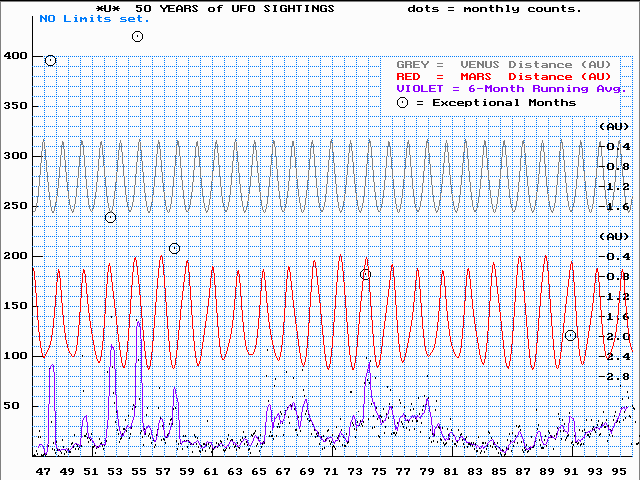
Thanks to Larry Hatch, creator of the *U* Database (a database of UFO reports and a program for accessing and analyzing them which is available from Mr. Hatch) we present here a graph of data showing how UFO report volumes have varied internationally over time[footnote 2]:
The following is a table of the numbers by year[footnote 3]:
| 1896 | 24 | "Great Airship" wave of NOV-DEC 1896.. |
| 1909 | 47 | More Airships in Britain and New Zealand mostly. |
| 1910 | 11 | |
| From 1911 to 1941 counts were very low..... a few per year. | ||
| 1942 | 22 | Wartime secrecy prevailed |
| 1943 | 12 | |
| 1944 | 29 | |
| 1945 | 31 | |
| 1946 | 74 | Many were Swedish "ghost rockets" |
| 1947 | 568 | Project 1947 unearthed many of these. |
| 1948 | 77 | Note sudden dropoff. |
| 1949 | 115 | |
| 1950 | 338 | |
| 1951 | 116 | Sudden dropoff. |
| 1952 | 859 | The biggest wave in the USA. |
| 1953 | 308 | |
| 1954 | 1014 | The vast majority were in France. |
| 1955 | 288 | |
| 1956 | 318 | |
| 1957 | 531 | Mostly in November. |
| 1958 | 165 | A sudden drop, followed by... |
| 1959 | 153 | a virtual drought until 1965.. |
| 1960 | 129 | |
| 1961 | 123 | |
| 1962 | 143 | |
| 1963 | 164 | |
| 1964 | 171 | |
| 1965 | 396 | July August and September dominate. |
| 1966 | 431 | |
| 1967 | 601 | Evenly spread throughout the year. |
| 1968 | 513 | |
| 1969 | 320 | |
| 1970 | 198 | |
| 1971 | 221 | |
| 1972 | 328 | |
| 1973 | 696 | October towers above other months. |
| 1974 | 556 | |
| 1975 | 502 | |
| 1976 | 406 | |
| 1977 | 458 | |
| 1978 | 561 | |
| 1979 | 346 | |
| 1980 | 238 | Another long "drought" begins |
| 1981 | 199 | |
| 1982 | 182 | |
| 1983 | 104 | |
| 1984 | 149 | |
| 1985 | 91 | The slowest year since 1948 |
| 1986 | 219 | |
| 1987 | 111 | |
| 1988 | 216 | |
| 1989 | 278 | |
| 1990 | 387 | Mostly 05 November in France |
| 1991 | 184 | |
| 1992 | 310 | |
| 1993 | 354 | |
| 1994 | 383 | |
| 1995 | 555 | Data for these years still coming in. |
| 1996 | 340 | |
| 1997 | 155 | |
| 1998 | 42 |
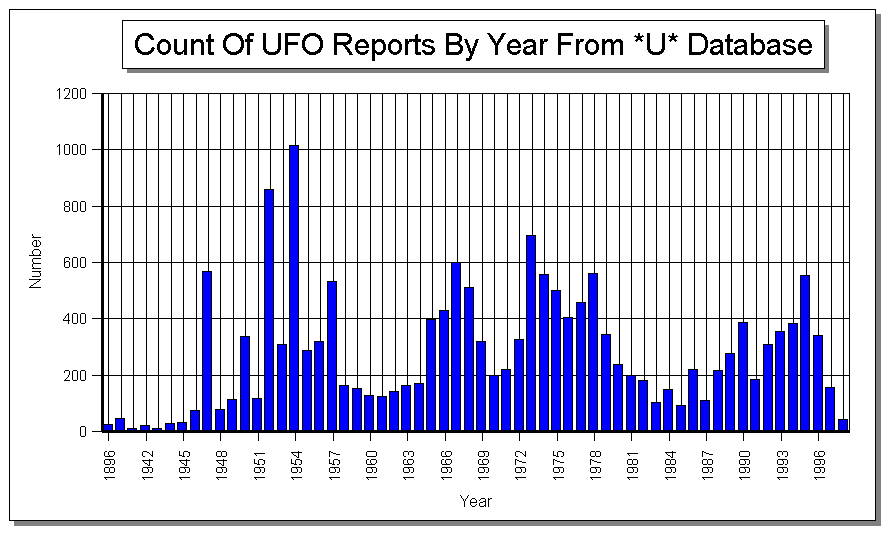
The following bars show more details of the variation:
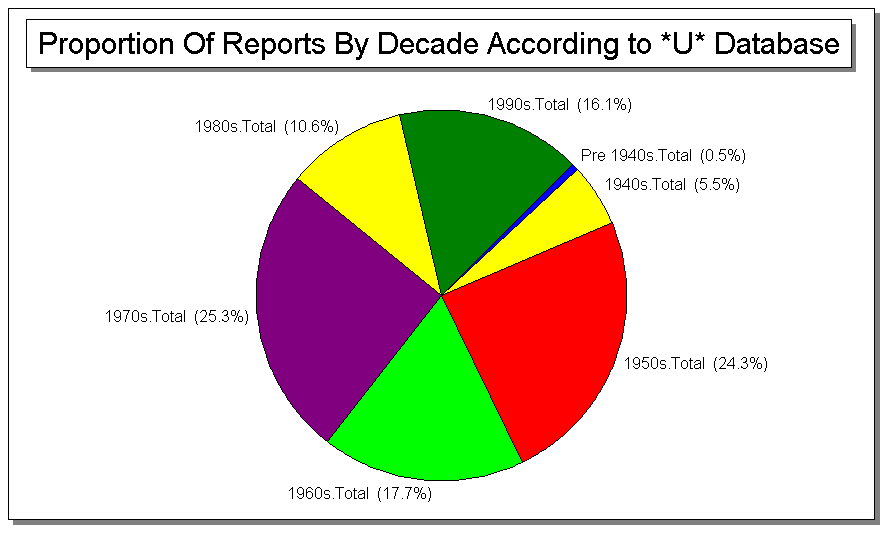
The proportion of total reports contributed, by decade:
Are There Waves Of Abductions?
At the 1999 Intruders Foundation Conference on Abductions, I raised the question of whether any periodicity in abductions had been found. Unfortunately, such a study had not been undertaken. Thanks to Larry Hatch and his *U* Database, I have prepared the following graph:
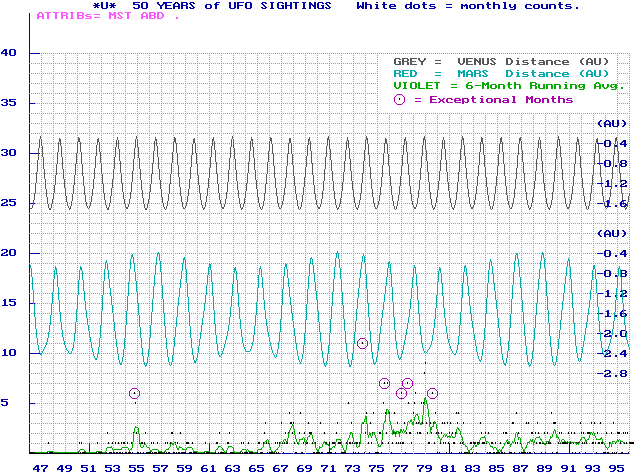
As you can see, there is at least some structure to these reports (retrospective accounts are included in this sample). Interestingly, the peak in reported events seems to be in the 1970s - after the Hill case, but before the widespread interest generated by Strieber, Hopkins, and others.
The next question is whether a correlation exists between peaks in UFO reports and peaks in abduction reports. Obviously, such correlations can only be properly assessed with statistical tools, however, a comparison of the graphs can be interesting and suggestive of whether such investigation is justified.
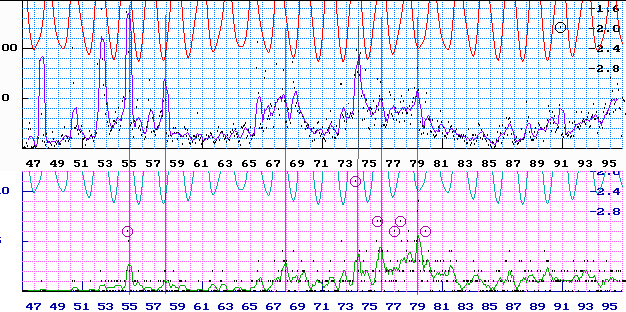
The top graph are sighting reports including abductions and missing time. The bottom is just abductions and missing time, which are less than 10% of the total. Some points worth noting:
-
The overall trends of the graphs are different, especially in the post 1987 time period.
-
There are some structural similarities, especially the "humps" in the mid fifties, the late sixties, and the early seventies to the early eighties.
- There are some notable years which peak in both graphs - 55, 68, 74, 76, 79. Whether this could be due to chance deserves study.
Footnotes
1. Note that this terminology has not yet attained universal acceptance.
2. "What I have done is to take 50 years of UFO sightings counts from 1946 to 1995, divided them into 600 months, and displayed them on a graph. Since the "dots" representing the counts for these months jump all over the graph, I used a "running average" to create a more visually sensible "curve". The waves and troughs of activity are quite evident. Data is taken from all 17,200 sightings listed in the *U* UFO Database, worldwide, except those which fall outside the 50-year date limits. Above the sightings-counts curve, are two other curves indicating the bee-line distances to Mars and Venus over the same period, and calibrated in Astronomical Units (AU) where one AU = the mean average distance from Earth to the Sun. Apparent correlations and anti-correlations between the planetary proximities and sightings counts are at least visually interesting." (E-mail from Larry Hatch to the Project 1947 mail list, 8/22/98 7:07 AM)
3. P-1947: 1957 - Wave or IFO flap? Larry Hatch UFO Updates Mailing List, 03.Aug.1998